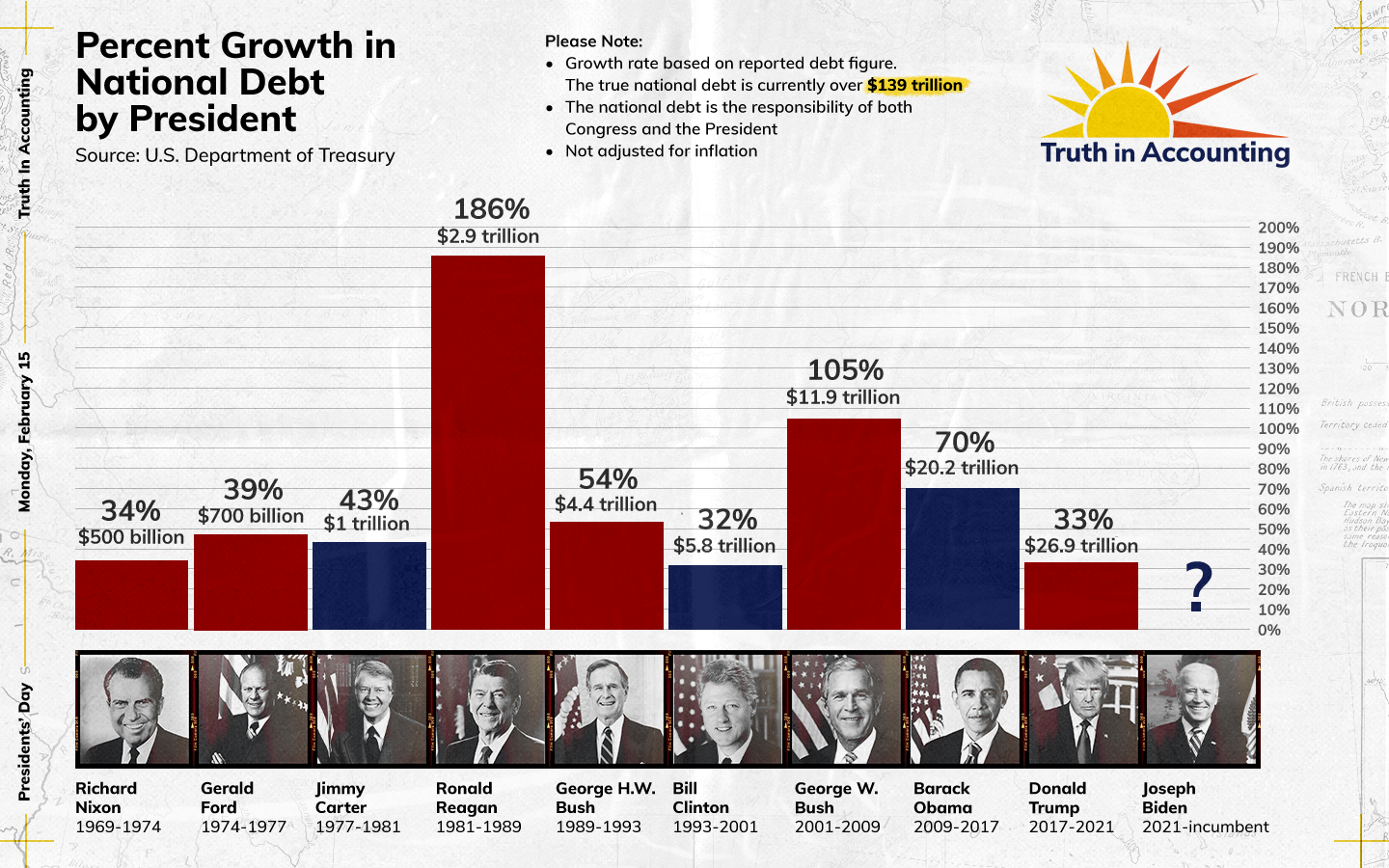
Brad DeLong in a recent blog post described the conflict among economists regarding the estimated increase in share of national income going to the top 1% of earners. The more conservative economists say that the increase is no more than 9% while the more liberal claim it may be as high as 15%. The real question in my mind is why should it increase at all? We are all citizens in the same economy. So why should one segment of the economy receive an ever increasing share of its total income. After all given that the total personal income of all Americans totals about 22 trillion dollars why should about 1 to 2 trillion of it be raked off by the top at the expense of the rest of us. In terms of national interest there is nothing that demonstrates that justifies them receiving a bonus over what they already make at the expense of all of us.
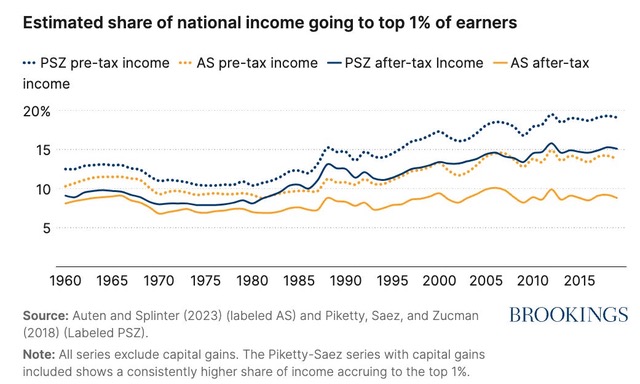
“As I understand things, Thomas Piketty, Emmanuel Saez, and Gabriel Zucman (PSZ) have corrected some errors they made in calculating the top 1% after-tax-and-transfer income share that were pointed out by Gerald Auten and David Splinter (and others).
PSZ now think the top 1% post-fisc share has risen from 9%→15% over 1960→2019.
But Auten and Splinter are not satisfied, and claim the post-tax-and-transfer income share rose only from 8%→9%.
Now come Gale, Sabelhaus, and Thorpe (GST) to keep score. And I am here to score their score…
My conclusion: The numbers to keep in your head for the top 1% are: 9%→14.2%.
But—and all this is really important!—there is a bunch of uncertainty about levels and differences and about the difference between post-fisc income and what we would really like to measure that either substantially attenuates or substantially amplifies that rise in inequality. And I would bet on “amplifies”, but not with a great deal of confidence. And I would say that the sociology of inequality changes in America since 1960 is probably at least as important as the money flows, and that I get confused about it whenever I try to think about it…”
THE FOG IS CLEARING, The Criminal Trial of Donald J Trump Will Determine The Outcome of The Election. It’s not the economy, it’s not Gaza, it’s not Biden’s ability to talk to the country. “It’s the Trial stupid”.
The polls are indicating that it’s really the criminal trial of DJT that is the deciding factor in 2024. Nothing else seems to matter in a currently tied race. It’s not the economy stupid, it’s the CRIMINAL CONVICTION BY A JURY.
I ask myself why? Why is a jury conviction necessary to turn all the voters on the fence against Trump. After all we all saw what he did on Jan 6.
It’s the built in presumption of innocence that stops those on the fence from turning against Trump, according to the polls. It’s also the respect for the American Jury System that is universally admired and respected. An accusation is just another political talking point. A criminal conviction by a jury of his peers is decisive , particularly in the battleground states.
The poll recently conducted by the NYT showing Biden losing to Trump by 4 points in all the battleground ground states except Wisconsin, show that if he’s convicted by a jury of a crime as a result of Jan 6, he loses to Biden by 10 points. That’s an Endgame statistic. And it’s reflected in numerous other polls and focus groups .
What’s the political takeaway: the 2024 election will be decided in the DC courtroom by Jack Smith’s prosecution and by the Appellate Courts, allowing the prosecution before the election. If Trump should be acquitted, he wins the Presidency. If he’s not tried at all, he has a shot. If he’s convicted he loses in a landslide ( or what is a landslide in the 21st century).
The Democrats could nominate FDR, and it probably wouldn’t change the outcome if he’s acquitted or convicted. But if there is no trial, the nominee matters. That’s why I believe that this criminal proceeding in DC will actually affect the Democratic Convention. If there is no Trump Trial, I believe Biden will be convinced to step aside and let the convention determine the nominee because it’s too close and too risky not too. Biden is no egomaniac. He will do the right thing if he has to. But he doesn’t have to step aside if Trump is tried and convicted. Right now that appears to be the smart play. But that can change if SCOTUS delays the trial until after the election.
Which brings us full circle: What’s the Court going to do. Personally I count at least five votes, probably seven votes, to allow the trial to proceed. : Gorsuch and Kavanaugh have previously written or opined that Presidents are not immune from criminal prosecution and would have to repudiate their long held past positions. The three Democratic appointed Justices will not delay or stop a criminal case against Trump. And at the end of the day, the remaining Federalist Society members of the Court, Roberts and Amy Coney Barrett will join the other members in upholding the Constitution and allowing the criminal prosecution of President Trump to proceed, because to do otherwise would repudiate the clear meaning of the Constitution and the most relevant precedent, US v Nixon.
So a criminal trial will happen before the election. God Speed Jack Smith, the Republic is in your hands.
https://www.nytimes.com/2023/12/26/opinion/trump-polling-conviction.html?smid=nytcore-ios-share&referringSource=articleShare — A Trump Conviction Could Cost Him Enough Voters to Tip the Election
And a few days later he added the following:
As a followup to my recent blog about Biden’s chances, this explains why the 2023 US economy has done so well. The political problem is that Biden has yet to receive the credit he deserves. It’s really his presentation and personality that seems to be the problem. He’s “grandad”.
“Do you want grandad to be President, rather than the next new thing. Of course not.”
The saving grace is Trump is headed to jail or disqualification or both. Haley is stumbling all over her shoelaces with the Civil War slavery comment that was provoked by a Democratic plant, and the Republicans have a very slim bench of talent, since they are chasing off or defeating their most talented politicians.
Bottom line: Despite the polls and the odds, Biden looks pretty good going into 2024. I’d rather have Gov. Gretchen Witmer but we have what we have. Biden will have a big decision to make if Trump is disqualified and/or convicted. Can he beat one of the Republicans on the bench? The polls suggest he can’t. It’s his call. He’ll wait to just before the Democratic Convention to decide.

LIVEBLOGGING WORLD WAR II: MARCH 19, 1943 (From Brad DeLong’s Journal)
WASHINGTON, Thursday—I wonder whether you agree with the statement I made yesterday, that we cannot overcome difficulties unless we recognize them. In talking to some Russians once, I was struck by the fact that they kept insisting that everything in their country was perfect. It seemed to me, at the time, as rather childish and adolescent, but forgiveable in a young country trying a new experiment. In us, a mature democracy, it would seem to me unforgivable to deny the existence of unpleasant facts.
A certain gentleman in Congress seems to have forgotten that groups of sharecroppers attracted the attention of the whole country not so very long ago, because they were living along the highways and their living conditions were as bad as bad could be. This gentleman thinks it odd that a group of people are willing to back a union which will try to improve conditions for these people, and that acknowledges the fact of the conditions under which sharecroppers in the United States of America have had to live in certain parts of our country.
Perhaps the gentleman in question, who mentions only three people on this committee, would like to have it also recorded that there are a few others members of this committee—among them Bishop Edward L. Parsons, Governor Saltonstall of Massachusetts, Mr. Raymond Gram Swing and Mr. William Allen White. Perhaps this gentleman in Congrees [originally: Congress] would like to hear the stories that some of the these sharecroppers tell, not just the poor Negroes, but some of his own white people. I hardly think he would approve of these conditions.
Since they exist, I think we had better set ourselves to correcting them. That is the mature way to approach all undesirable situations. Of course, if he approves of them, then I can well understand that he does not wish to have them mentioned.
Hitler’s propagandists can make far greater use of things that are wrong and which we do not try to correct, than they can when we try to improve conditions. This member of Congress is evidently not reading some of the things which the German propagandists have said about situations which have occurred in this country, at least he makes no mention of them.
Eleanor Roosevelt
(God bless you Mrs. Roosevelt.)

“If you pay someone for sex and the law finds out, they arrest you. If you pay someone for sex and your neighbors find out, they judge you. If you pay someone for sex and a corporation finds out, they offer to rent you a room.”
Meyer, Scott. Destructive Reasoning (The Authorities Book 2) (p. 156). Rocket Hat Industries.
“We Italians are cracked, but the Irish go us one better when it comes to settling a beef. With us, it’s just business; with them, it’s mysticism.”
Kotzwinkle, William. Bloody Martini: A Felonious Monk Mystery (The Felonious Monk Mysteries Book 2) (p. 114). Blackstone Publishing.
The following is a lightly edited version of a post by Fred Civish that I came across on Quora. I believe it offers an excellent exposition of the variations and intricacies of the X and Y chromosomes in determining the sex of a fetus and their impact on the individual’s life following birth.
There are two common combinations of chromosomes: XX and XY. But you might wonder why nobody is ever born with YY chromosomes. What would happen if it were possible, and would they be incredibly masculine? Let’s explore this.
In reality, there are more than just two possibilities, though the other variations are typically considered genetic errors.
First and foremost, YY chromosomes by themselves cannot support life. The X chromosome carries genes that are crucial for normal functioning and development, and these genes are not present on the Y chromosome. In men, the X chromosome is fully functional, and they cannot survive without it.
Among the other chromosomal variations recognized by medicine are:
X or X0 (where the 0 denotes a missing second X chromosome). This condition is known as Turner’s Syndrome, and those affected are typically female. It occurs in approximately 1 in 2000 to 1 in 5000 women. Individuals with Turner’s Syndrome may be slightly shorter, have a webbed neck, and low-set ears. They generally do not menstruate and are usually unable to reproduce.
XXY, referred to as Klinefelter’s Syndrome. Individuals with this condition are male, although they may exhibit some slightly feminizing characteristics. They might be slightly taller and tend to be weaker. Typically, they have smaller, poorly functioning testicles and are often infertile. Klinefelter’s Syndrome occurs in 1 in 500 to 1 in 1000 men, and most individuals affected are unaware of it.
XYY, known as Jacob’s Syndrome. Those with this condition are male and generally appear normal, with normal functioning and fertility. It often goes unnoticed.
XXX, associated with Triple X Syndrome. Individuals with this condition are female and may have slightly lower average IQs, around 85 to 90. Approximately 1 in every thousand women have Triple X Syndrome, and most are unaware of it.
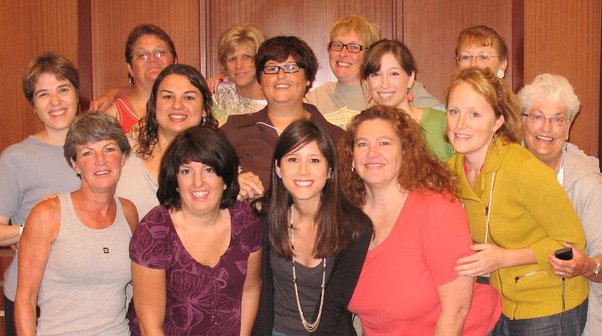
` XY but still female. In this case, individuals carry the Y chromosome but possess a genetic resistance to testosterone, causing them to develop as females. This falls under the category of Androgen Insensitivity Syndrome, which includes various variations. One of the most remarkable is Testicular Feminization Syndrome, a rare variant occurring in perhaps one out of every 50,000 women. These individuals often appear strikingly beautiful and phenotypically female but lack a uterus or functioning ovaries. Instead, their vagina ends in a blind pouch without a cervix. Since they do not have a uterus, they never menstruate. Typically, the condition is discovered in their mid-teen years when menstruation does not occur. Often, these individuals have internal testicles, which are removed through abdominal surgery due to the high risk of cancer, even though the testicles do not function.
Here is a picture depicting various women with different types of Androgen Insensitivity Syndrome, all of whom have XY chromosomes.

A. The Purpose of Marriage.
“ Marriage after all was invented primarily to make sure that those with enough resources for it to matter who agree to live together, know how those resources are used and who gets them if one party dies and where the eager lovers overlooked entering into whatever version of a prenuptial agreement available at the time. Kings and Queens have always entered pre-nups of one source or another. It usually included the dowry, especially when the dowry contained say a kingdom. Love never had anything to do with it.”
Trenz Pruca
B. The Grim Realities of Politics.
“We progressives can slap ourselves on the back all we want, but as usual we often fail to grasp the grim realities of politics that it is an eternal war of attrition and the opposition is better funded, equipped and trained while all too often all we have is our optimism to sustain us as the barricades are overrun while we wait for popular support that never comes.”
Trenz Pruca
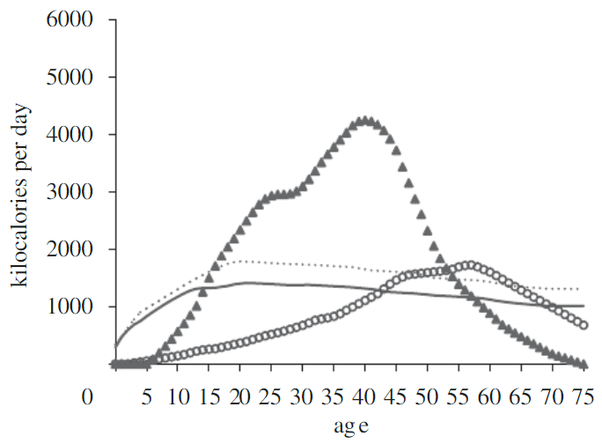
The triangles in this chart show a measure of hunting success rate for men. The circles show a success rate for food gathering by women. Again, performance peaks at a fairly late age, especially for women. (The other lines show energy eaten.) Additional investigation of other hunter-gatherer tribes show similar results. It demonstrates success rates for finding different kinds of animals. Success rates vary with the type of animal. More importantly, older men are more successful men, with peak success appearing in the mid 30s or even 40s for some animals. The chart shows a measure of hunting success rate in hunter gatherer men and the success rate for food gathering by women. Again, performance peaks at a fairly late age, especially for women. (The other lines show energy eaten.) The studies demonstrates that men are their most productive at about 30 to 45 years of age and then seem to fall off rapidly until death. In woman, however, their productivity increases more slowly and steadily until women attain an average of about 80. Their descent is far less precipitous than men and they remain capable and competent for much longer.
What I conclude from this is:
1. An 80 year old woman should never be considered too old to be President. They are Just entering their Prime.
2. After they reach about 50 years of age men’s consumption requirements seem to exceed their productivity while women appear not to do so until their mid 70s. This seems to raise the question whether for about 20 years from 50 to 70 men generally live off women. On the other hand I guess during the 20 years from 20 to 40 yeas of age the situation may be reversed. So I guess it’s a wash.
3. For about 12,000 years from the agricultural revolution when many humans abandoned the hunter gatherer life for that of the somewhat less daily energy consumption required for farming, until the beginning of the Industrial Revolution (and perhaps until even the present time) men have been ripping off women
3. Given that modern life requires much less individual expenditure of energy than hunting wild game in the jungle, or even gleaning roots and berries, men are outdated and inefficient mechanisms for human survival and should be retired and relegated to perform only necessary physical labor, procreation and child rearing. Or perhaps even culled since their current numbers are no longer necessary for species survival.
NOTE: [A]mong all extant hunter gatherer societies, who have a societal make-up and lifestyle similar to our ancestors, polygyny is the most consistently recorded and socially recognized form of CNM (Hill & Hurtado, 2009;Marlowe, 2003). Furthermore, both modern and ancestral patterns of sexual dimorphism in human anatomy suggest that the reproductive success of males has historically been more varied than females, a pattern consistent with polygyny practiced over long time periods (Schacht & Kramer, 2019). .

Let’s Talk About The End Of The World.
Well, maybe not the end of the world, although it or something like it is probably coming at around the turn of the century. There are a number of so called existential threats floating around like the specter of nuclear war, the alarming collapsing of biologic diversity and the like. The existential threat I like to discuss is hydrocarbon emissions causing global warning and other threats to the continued existence of humanity and perhaps the entire biosphere. These emissions, primarily in the form of carbon dioxide (CO2), are a key driver of global warming and the resultant climate changes that threaten the stability of our planet.
Let’a look at some global statistics:
A. CO2 emissions
1900: CO2 emissions per capita ≈ 0.6 billion metric tons / 1.6 billion people ≈ 0.375 metric tons per person
1950: CO2 emissions per capita ≈ 1.6 billion metric tons / 2.5 billion people ≈ 0.64 metric tons per person
1980: CO2 emissions per capita ≈ 5.7 billion metric tons / 4.4 billion people ≈ 1.295 metric tons per person
2000: CO2 emissions per capita ≈ 7.9 billion metric tons / 6.1 billion people ≈ 1.295 metric tons per person
2020: CO2 emissions per capita ≈ 36 billion metric tons / 7.8 billion people ≈ 4.615 metric tons per person
B. Global air temperatures
1900-1950: 0.15 to 0.2 degrees Celsius (0.27 to 0.36 degrees Fahrenheit)
1950-2000: 0.35 to 0.6 degrees Celsius (0.63 to 1.08 degrees Fahrenheit)
2000-2020: 0.2 to 0.3 degrees Celsius (0.36 to 0.54 degrees Fahrenheit).
Some may have seen different numbers for global air temperatures, some higher and some lower. Many of them seem to have measured a smaller time range (days, months or a year). Here we took as much a 50 year periods to review. What it appears to show is that in the past 120 years the earths air has warmed and the rate of that increase has accelerated.
According to these estimates, the critical threshold of a 2.0°C increase, widely regarded by the scientific community as a point of no return for global warming, may be breached by 2050, and potentially even earlier due to the recent escalation in warming trends.
A crucial point of reflection lies in the remarkable changes in CO2 emissions patterns over the years. In the last 50 years of the 20th century, CO2 emissions surged by almost 500%, with a staggering 3.5-fold increase during the first 30 years alone. Surprisingly, during the final two decades of that century, emissions remained relatively stable, increasing by a mere 0.3%. However, a stark transformation occurred in the first two decades of the 21st century, witnessing an almost 500% surge in CO2 emissions.
There may be many reasons for the slow down in CO2 emissions during the last 20 years of the 20th Century, however, I cannot help but believe that that period was one of general environmental consciousness — save the Amazon, save the coast, save the redwoods, save and restore the wetlands, and the like while the first two decades of the 21st century the political focus changed to Climate change with its emphasis on large industrial projects such as the production of solar arrays, wind farms and the like. This change in emphasis was accompanied by shift in public and private funding, from preservation and restoration to industrial production, and financial return.
In California, the fifth largest economy in the world and home to over 30 million people, there has also been a shift to surrendering general environmental protections in favor of Urban Infill. I assume this development was based upon an erroneous belief that by concentrating development in already environmentally stressed urban areas, it will somehow discourage development ir rural areas thereby protecting open space. Few things can be further from the truth.
While the latter may be necessary but so is the former, perhaps even more so,
What accounts for this significant shift in emissions patterns? While there may be numerous contributing factors, one cannot overlook the influence of a burgeoning environmental consciousness that prevailed during the latter part of the 20th century. This was an era marked by concerted efforts to save the Amazon rainforest, protect coastal areas, preserve the redwoods, and restore wetlands, among other noble initiatives.
However, the first two decades of the 21st century ushered in a notable change in political focus, with a heightened emphasis on combating climate change. This shift led to a surge in large-scale industrial projects such as the production of solar arrays, wind farms, and similar endeavors. As priorities changed, so did the allocation of public and private funding, shifting from preservation and restoration efforts to industrial production and financial returns.
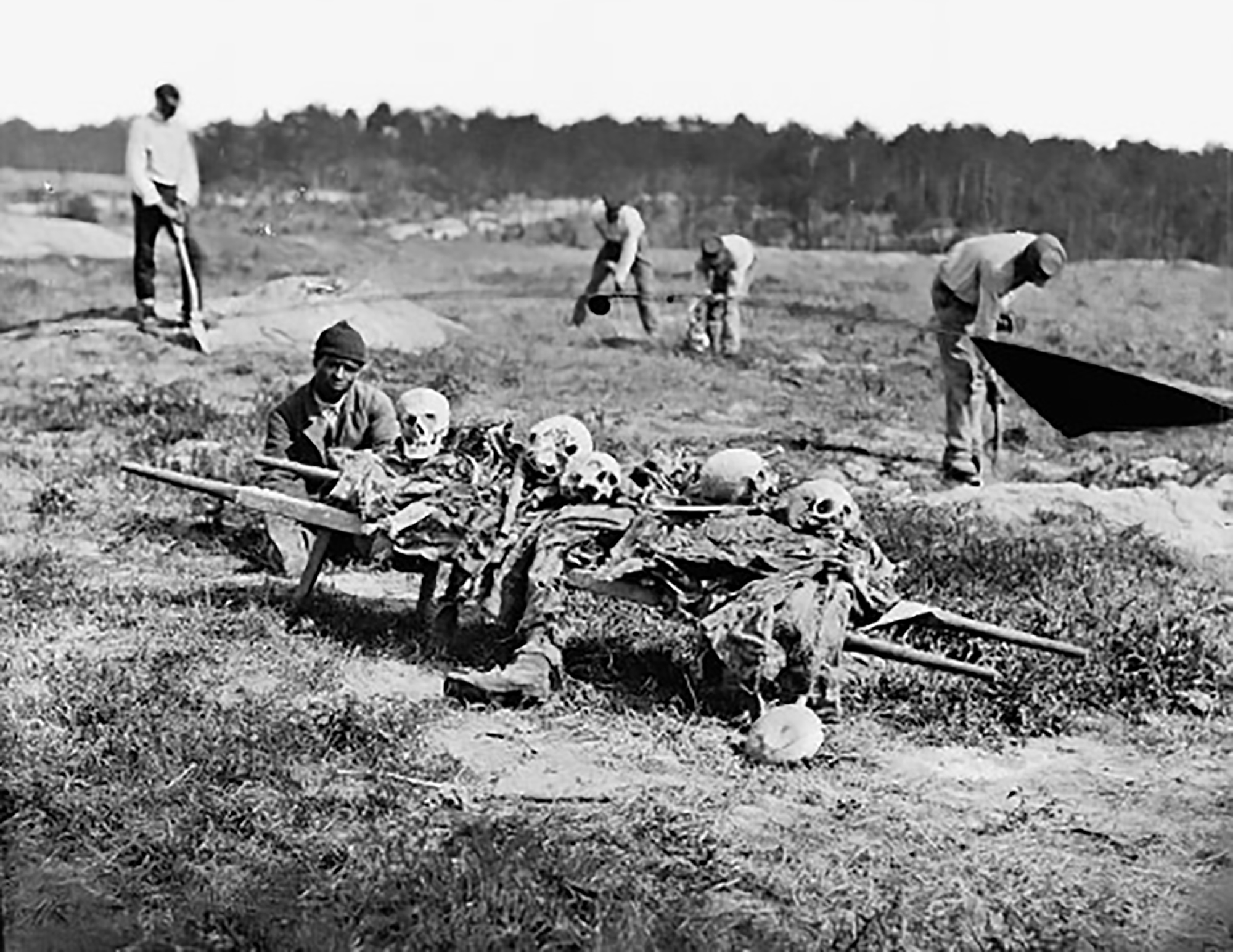
War (and years of U.S. military involvement) Number of fatalities
American Civil War (1861-1865) 620,000
World War II (1939-1945) 405,399
World War I (1917-1918). 116,516
Vietnam War (1965-1973) 58,209
Korean War (1950-1953) 36,516
American Revolutionary War (1775-1783). 25,000
War of 1812 (1812-1815). 20,000
Mexican-American War (1846-1848). 13,283
War on Terror* (2001-present). 7,077
Spanish/American War (1898). 2,446
Gulf War (1990-1991). 258

 Trenz Pruca's Journal
Trenz Pruca’s Observations: Rumination on the Long Generation.
If when I was five years old and shook the hand and listened to the stories of someone who was the age that I am now, he would have been born during the Civil War. If he in turn, when he was five, shook the hand of another old man and listened to his stories, he might have learned that that man when he was young had shaken the hand of someone who had shook the hand of someone who may have known Shakespeare. Three handshakes by old men represent a chain of history from Donald Trump to William Shakespeare.
(Hmm——This may evidence that, as a species, we may have been devolving faster than we realize.)
Recently, my partner told me that when she was young her Grandmother told her that when she was young and growing up near Balmoral Castle in Scotland, she used to watch Queen Victoria and Prince Albert traveling in their carriage to the local church to attend Sunday services.
This is a long generation.
Share this: